



Jean-Auguste Franquelin
Irina and Léonie The Republicans
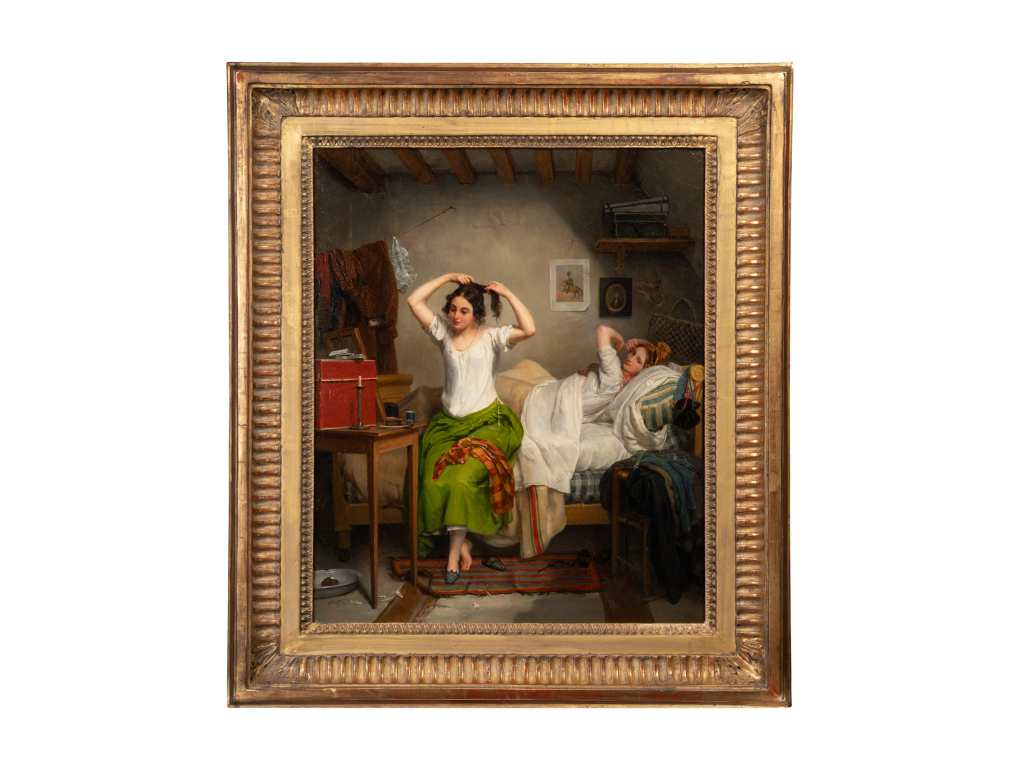
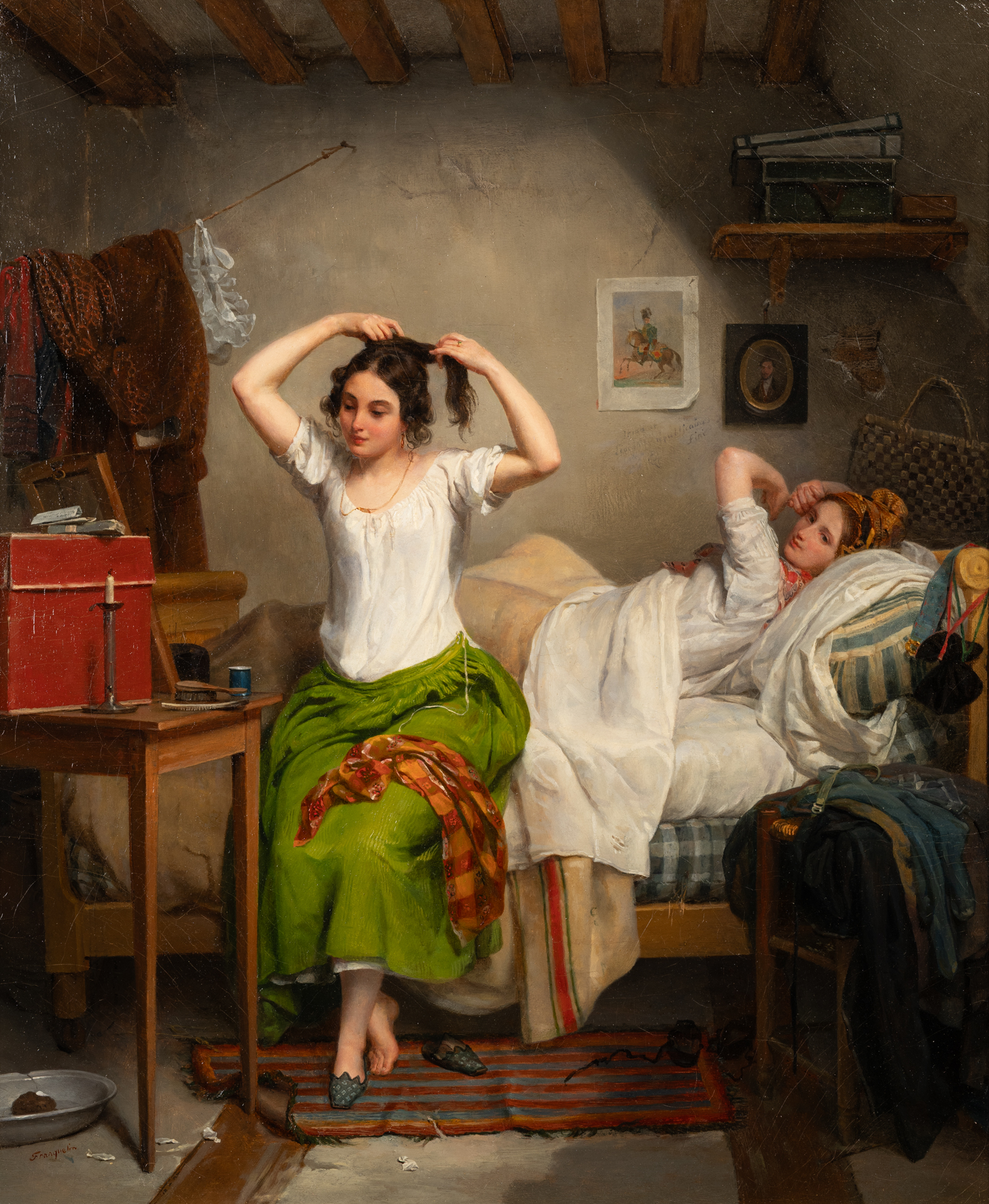
Oil on canvas, signed Franquelin lower left
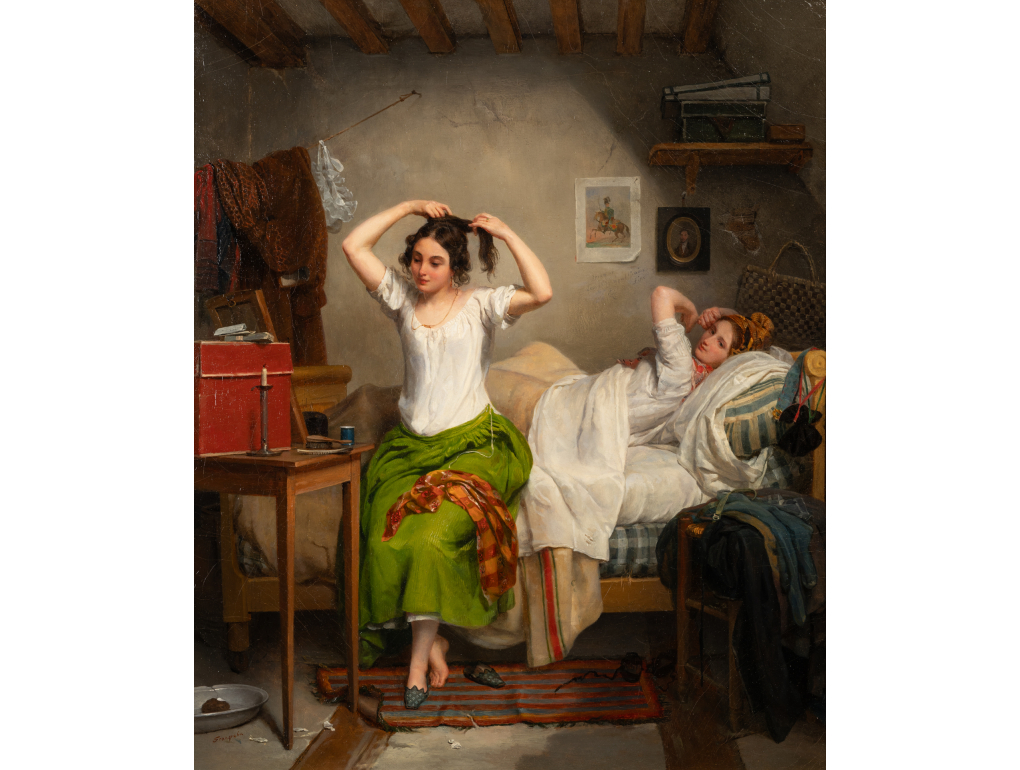
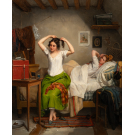
This scene, delicately painted by Jean-Augustin Franquelin, belongs to the tradition of intimate 19th-century interiors, where every visible element becomes imbued with historical or emotional meaning. In a simple yet carefully structured interior, two young women occupy the scene: one sits, combing her hair before a small table mirror; the other, reclining on a bed, her dreamy gaze turned towards her companion or perhaps the viewer, suggests an intimate connection between the two figures.
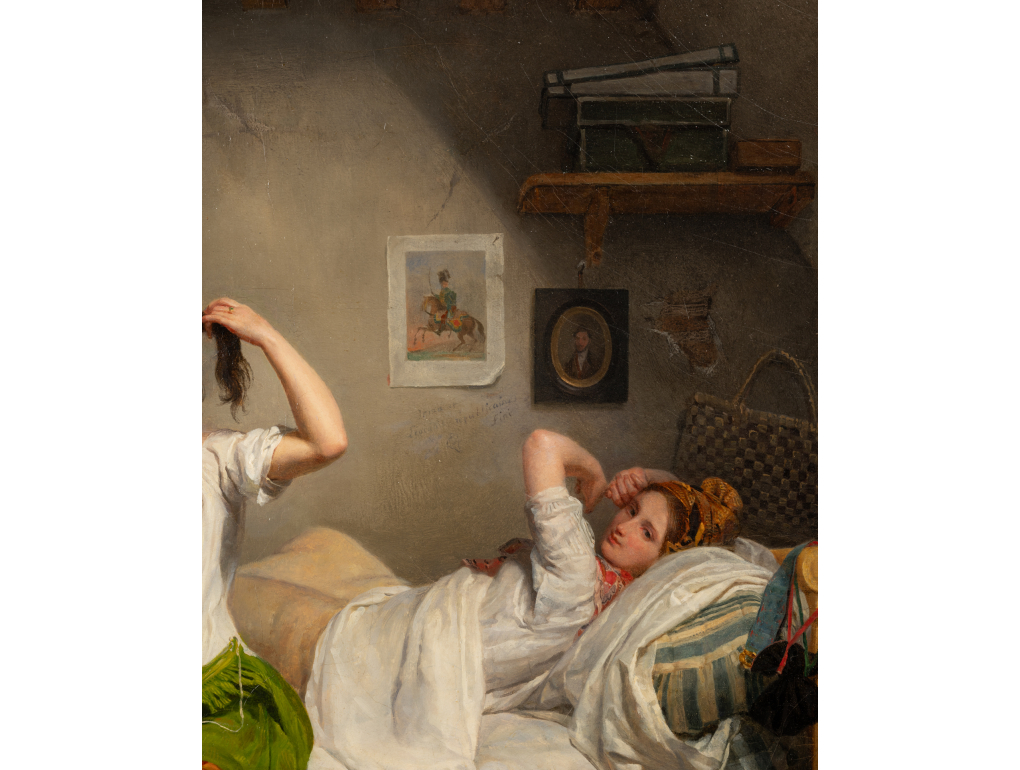
The modest furnishings (wooden bed, table, chair, small red mirror, bedside rug) are painted with realism and restraint. Every detail -clothing, toiletries, shoes, curtains-contributes to creating an atmosphere that is both familiar and tense. But it is above all the back wall that reveals the symbolic significance of the work: an oval portrait of a dark-haired man in a dark frock coat, without a caption, evokes a citizen or republican officer, without precise identification. A print of a horseman in a green uniform and bicorn hat -likely a mounted chasseur of the Imperial Guard-embodies the republican or imperial military memory, so prevalent in the visual culture of modest households at the time. Finally, a handwritten inscription painted directly onto the wall reads: “Irina and Léonie, finished republicans,” transforming these two young women into silent figures of political memory.Read more
Thus, behind this seemingly commonplace genre scene, Franquelin offers a bittersweet allegory of the revolutionary legacy, seen through a feminine and domestic lens. The painting can be interpreted as a subtle homage to Pauline Léon, founder of the Society of Revolutionary Republican Women in 1793, whose first name, “Léonie,” could be an allusion. The work then becomes a rare example of genre painting with historical and symbolic dimensions, where the intimate space echoes a discreet yet persistent republican commitment.


Our artwork available

93400 Saint-Ouen sur Seine