



Guirand de Scevola Lucien-Victor
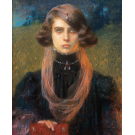
Portrait of a Woman
Pastel on canvas signed and dated lower right:
“Guirand Scévola 1902”
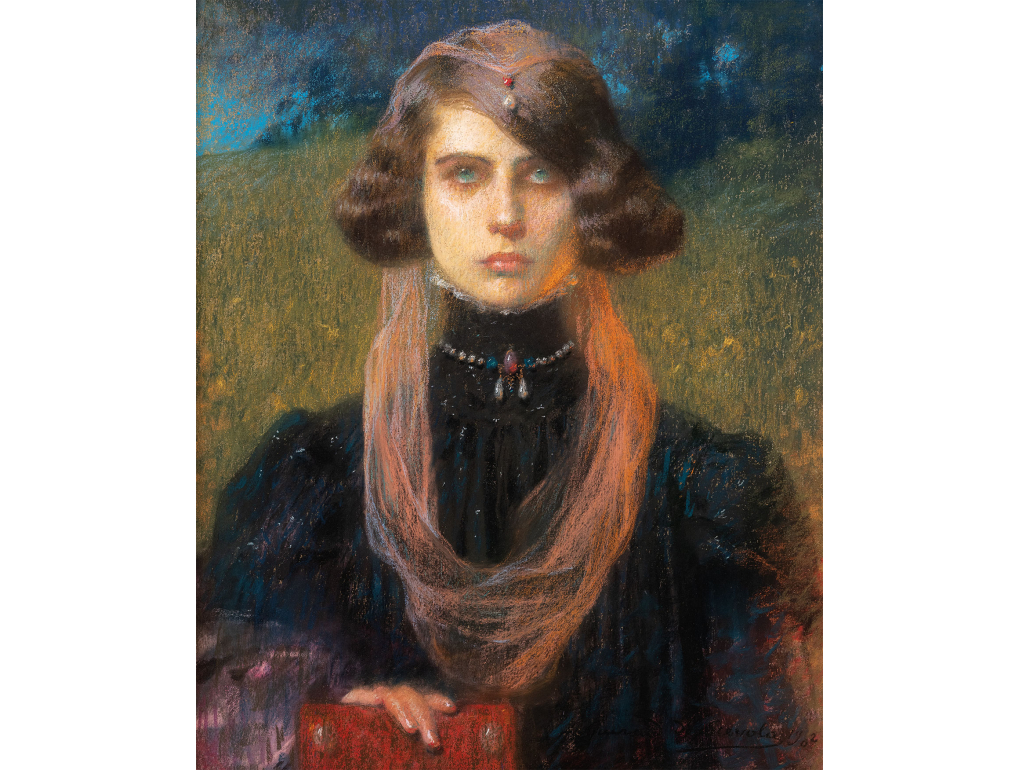
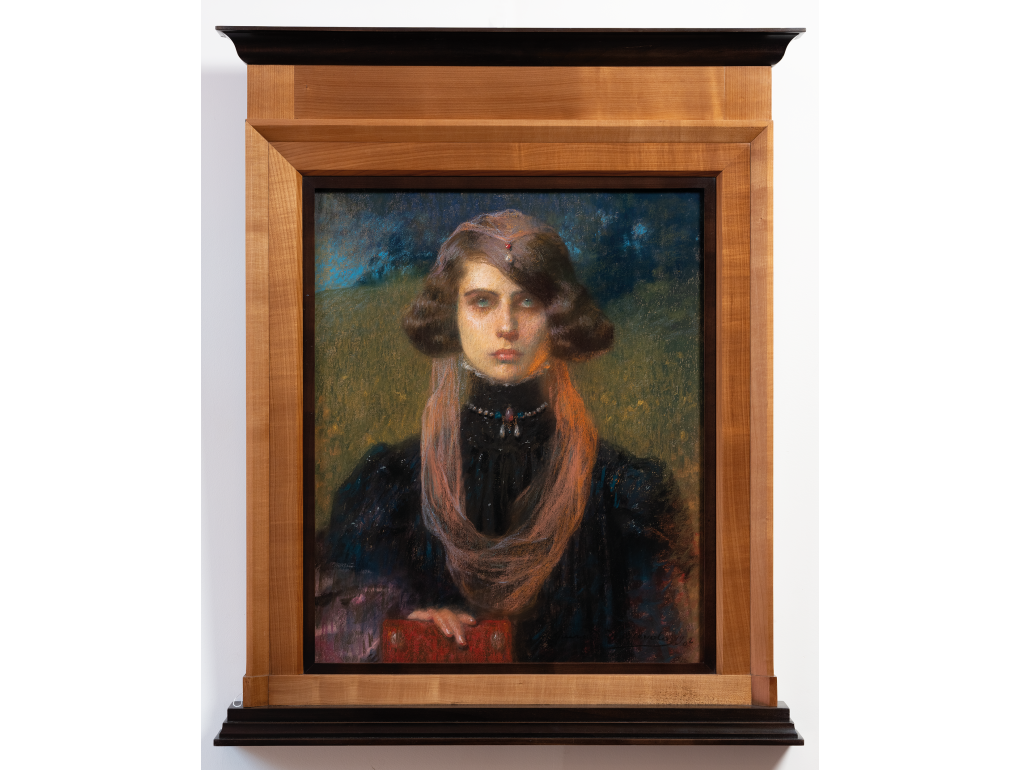
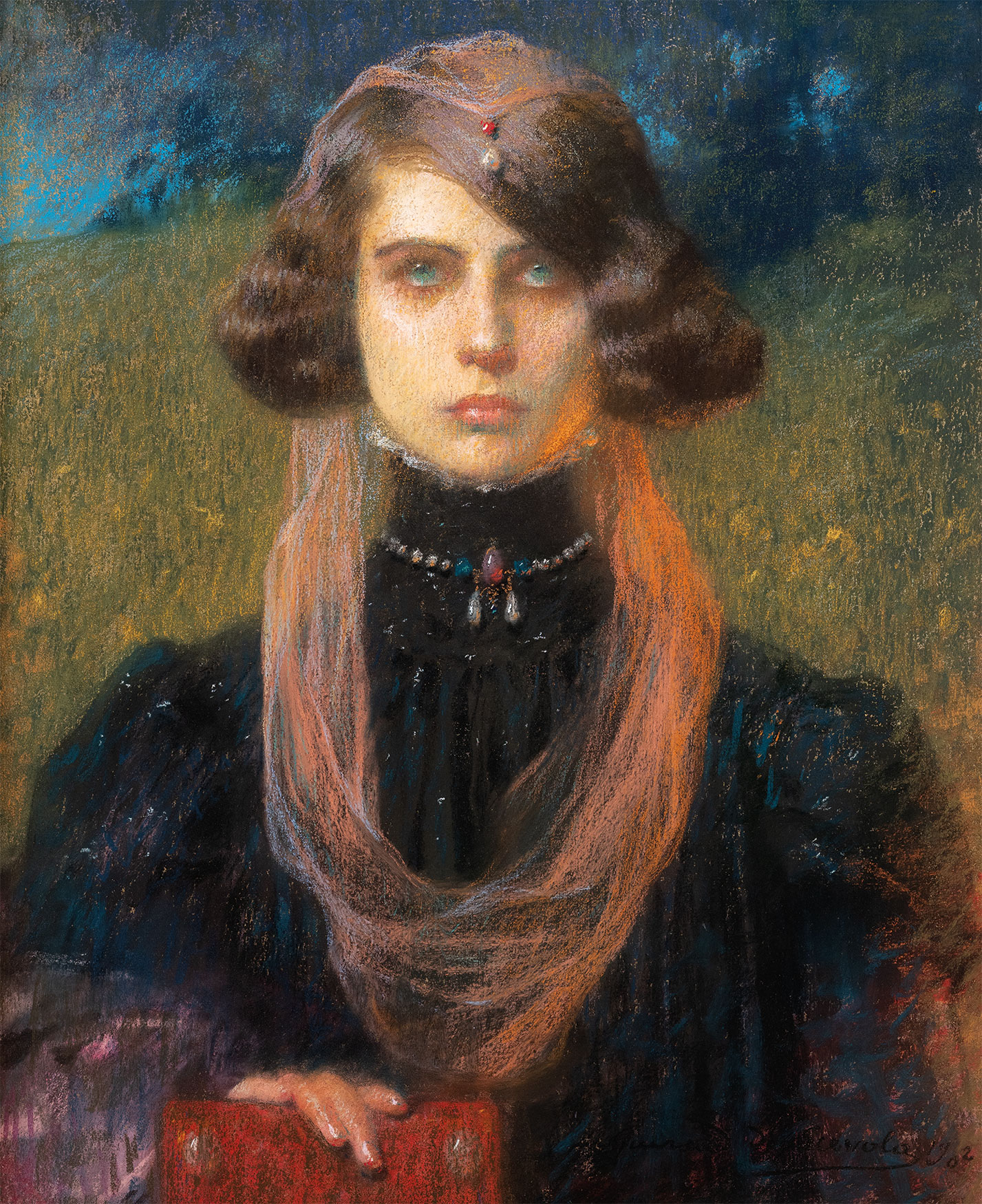
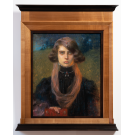
The pastel presented here belongs to the period in which Guirand de Scévola, at the height of his artistic powers, devoted himself most intensely to the Symbolist vein that would remain one of the defining features of his work. A young woman is shown in bust-length against a landscape handled with great freedom — dark foliage and an opening onto the sky — which resists any precise sense of place and immediately situates the figure outside time. Her face, framed by softly curling brown hair parted to one side, is seen frontally; her clear gaze meets that of the viewer with a calm intensity, lending the image an almost hypnotic presence. A jewel set with a stone adorns the hairline, while a salmon-pink veil, wrapped several times around her neck and shoulders, falls in vaporous folds into the foreground, where the sitter’s hand rests on a red morocco-bound book. A necklace of pearls and precious stones, from which hangs a motif set with a red stone, accentuates the high neckline of her dark dress.Read more
This ornamentation, rendered with a precision that contrasts with the deliberate vagueness of the surrounding setting, places the figure in a consciously ambiguous realm: the refined salons of fin-de-siècle Paris and a medieval chivalric narrative seem equally plausible. It is precisely this indeterminacy that gives the work its Symbolist power — a figure who belongs to no single period because she seems to embody them all.
The pastel technique is here brought to an exceptional degree of refinement. The modelling of the face is built up through successive layers of soft blending that eliminate any harsh contour, while the background, treated with broad, rubbed strokes, remains intentionally less finished — a device that focuses attention on the face while creating an atmospheric sense of depth. This freedom of handling in the landscape, set against the almost jeweller-like precision of the hair ornament and necklace, is one of the most recognisable features of the artist’s manner during these pivotal years.
This pastel may usefully be compared with an oil portrait painted in the same year, 1902, depicting a woman of strikingly similar appearance — the same short, curly brown hair, the same dark high-necked dress, and the same necklace with a red-stone pendant. This suggests that the artist may have worked with the same model on two occasions, using two different techniques, during a particularly fruitful year for his Symbolist work.
Our artwork available
93400 Saint-Ouen sur Seine